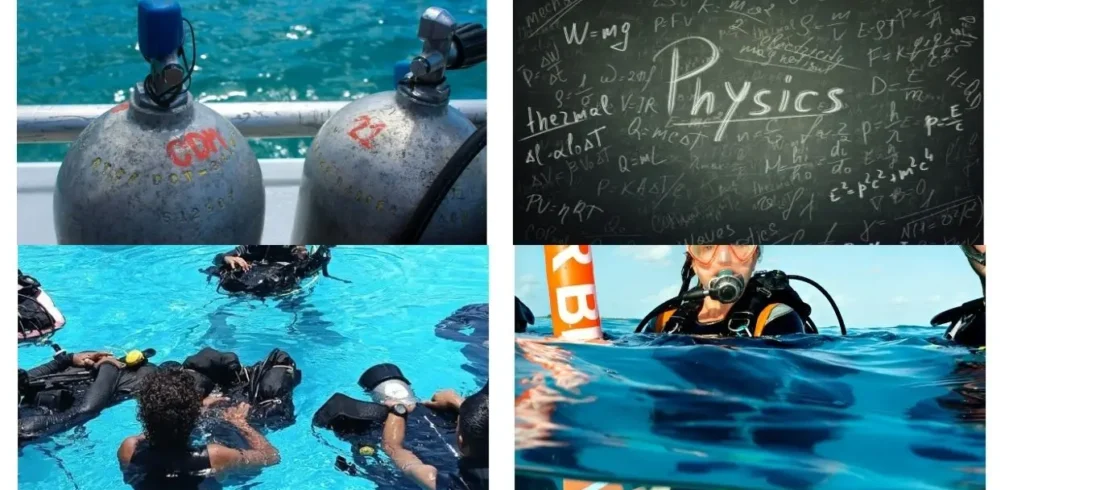
In the world of scuba diving, knowledge is just as vital as the equipment you wear. Whether you are a beginner taking your first breaths underwater or a professional preparing for instructor exams, understanding the science of the deep is crucial. This is where Diving Mentor YouTube comes in—a dedicated platform designed to simplify complex...
Fundamentals of Dive Physics: Understanding Boyle’s Law and Diver Safety Understanding the physical laws governing gas behavior underwater is the cornerstone of diver safety and professionalism. Principal among these is Boyle’s Law, which defines the inverse relationship between pressure and volume—a principle that explains the physiological and mechanical changes occurring during every scuba dive.
The amount of change in either volume or pressure of a given volume is proportional to temperature changes. At Diving Mentor, we want you to understand how this affects your gear. As the temperature increases, the volume of a flexible container will increase, and the pressure inside a non-flexible container (like your scuba tank) will...
What is it? In recreational diving, Enriched Air Nitrox (EANx) is any nitrogen/oxygen mix with extra oxygen added. The Big Difference: * Standard Air: Contains roughly 21% Oxygen and 79% Nitrogen. Nitrox: Has a higher oxygen proportion, typically 32% or 36%. Decoding the Names: You’ll often hear terms like “Nitrox 32” or “EANx36.” EA stands...
In our daily lives on land, we live under “Atmospheric Pressure” (1 ATM). However, the moment you gear up and descend into the Red Sea, the rules change. Water is much heavier than air, meaning pressure increases rapidly; for every 10 meters (33 feet) you descend, the pressure increases by 1 ATM. Read more: Why Do We Feel...